There is something strange about the way we talk about Japanese watches.
A Grand Seiko is introduced as an alternative to Rolex. A Seiko Presage is praised for offering Swiss-level finishing at a fraction of the price. And when a Japanese independent produces something remarkable, the conversation somehow finds its way back to Switzerland.
It is almost as though Japanese watchmaking needs a Swiss reference point to justify its existence.
I have never quite understood that.
Japan has spent decades developing some of the most interesting technologies, designs and manufacturing techniques in modern watchmaking. Yet much of the conversation still revolves around what Japanese brands offer compared to their Swiss counterparts.
And while there is nothing wrong with comparing watches, I think this particular comparison has started to overlook what makes Japanese watchmaking interesting in the first place.
Because the more you explore it, the more you realise that Japan has never really been trying to become Switzerland.
It has been developing something of its own.
More Than Just Value for Money
For a long time, Japanese watches occupied a relatively predictable position in the industry.
They were reliable, well-engineered and accessible. Switzerland, meanwhile, represented prestige, heritage and luxury.
Of course, the reality has always been more complicated.
Grand Seiko was established in 1960 with the ambition of creating some of the world's finest watches. Seiko had already introduced Japan's first wristwatch, the Laurel, in 1913, and would go on to transform the industry with the introduction of the Quartz Astron in 1969.
These were not small achievements.
But while Switzerland successfully built much of its modern luxury identity around mechanical craftsmanship, Japan became closely associated with precision and technological innovation.
One was celebrated for tradition. The other for efficiency.
Today, that distinction feels increasingly outdated.
According to the Japan Clock & Watch Association, overseas shipments of finished watches by Japanese member companies grew by 10% in value in 2025, with mechanical watches recording particularly strong growth. The figures include overseas manufacturing operations rather than Japanese-made exports alone.
This does not mean Japan is overtaking Switzerland. The industries operate at different scales, price points and production structures.
What interests me more is what is happening to the watches themselves.
Japanese brands are increasingly finding audiences who are interested in their designs, technologies and craftsmanship, not simply their prices.
And that is a much more interesting development than another discussion about value for money.
Grand Seiko Has Nothing Left to Prove
If there is one brand that captures this change, it is Grand Seiko.
For years, enthusiasts have spoken about its exceptional finishing, distinctive dials and impressive movements. Yet the brand is still frequently introduced through comparisons with Rolex.
I think that does Grand Seiko a disservice.
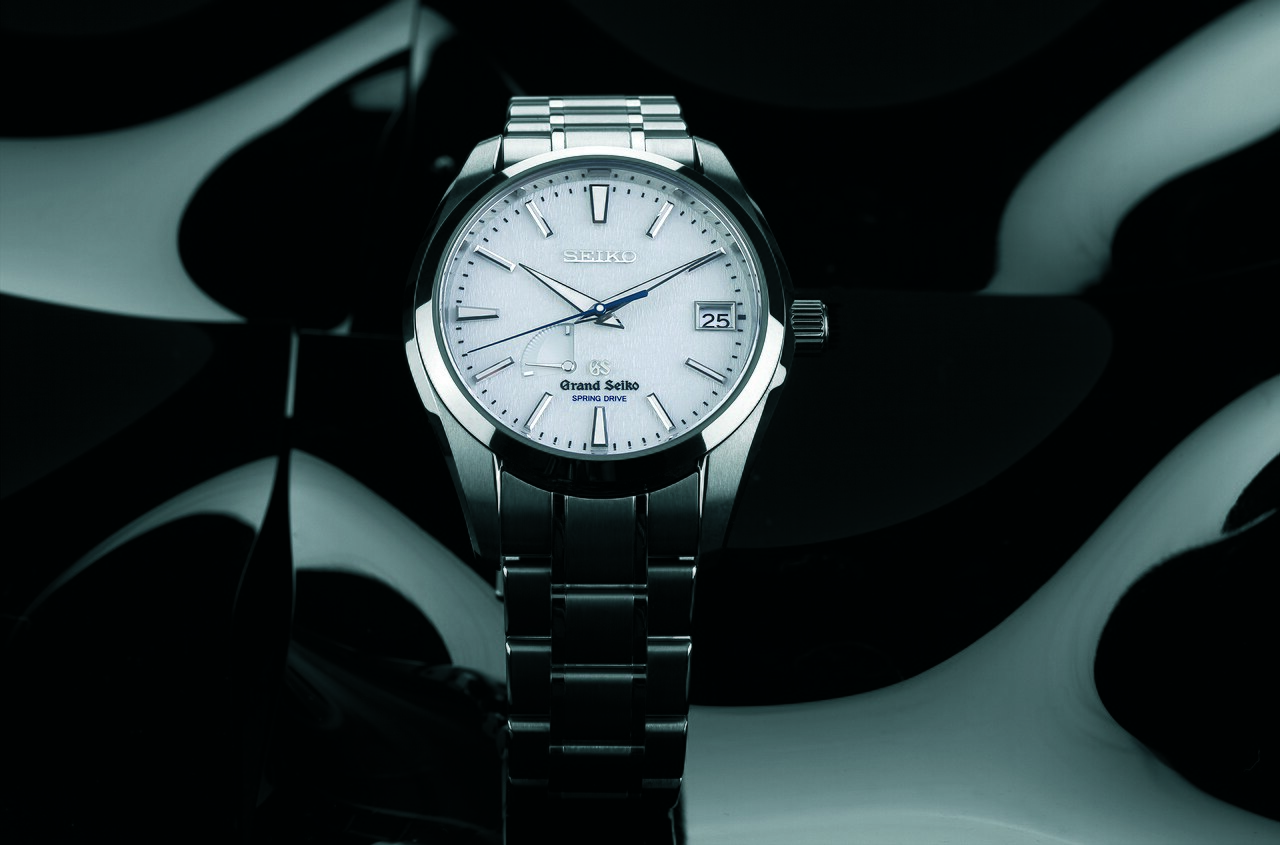
Take the Spring Drive U.F.A., introduced in 2025.
Its Caliber 9RB2 achieves a stated accuracy of ±20 seconds per year, an extraordinary accomplishment for a mainspring-driven movement.
Spring Drive itself sits somewhere between traditional mechanical watchmaking and electronic timekeeping. A mainspring provides the energy, while an electronically regulated system controls the movement.
The result is that unmistakable seconds hand, gliding around the dial without the conventional ticking motion.
But what makes the SLGB003 particularly appealing is not simply the technology.
It is how Grand Seiko has packaged it.
A 37mm titanium case, a softly textured dial inspired by frozen forests near the Shinshu Watch Studio, and finishing that becomes more interesting the closer you look.
Nothing feels particularly excessive.
Personally, I find this approach more compelling than adding complications simply to demonstrate technical ability.
There is something confident about a watch that contains remarkable engineering without needing to announce it.
That said, I also think Grand Seiko's reputation for beautiful dials can sometimes overshadow the rest of the watch. Not every nature-inspired texture automatically makes for a great design, and some models are more successful in their proportions than others.
The SLGB003 works because the elements feel connected.
The movement, materials, finishing and dimensions all serve the same idea.
And perhaps that is what luxury should be about.
Citizen Might Be Asking the Most Interesting Question
Now for a slightly controversial opinion.
I think Citizen has produced one of the most underappreciated technical achievements in contemporary watchmaking.
And it is not mechanical.
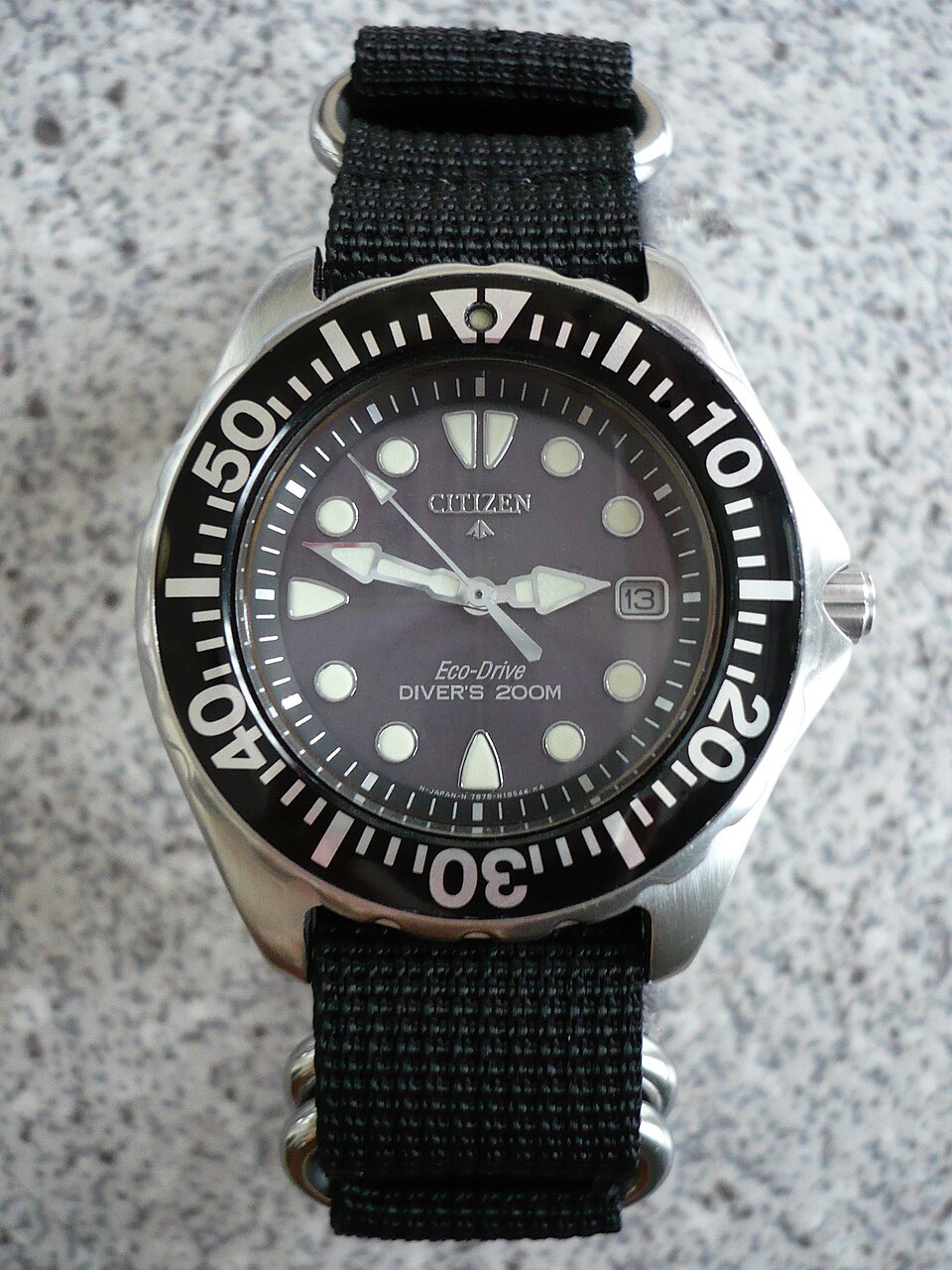
In 2019, Citizen introduced the Caliber 0100, a light-powered Eco-Drive movement capable of maintaining a stated accuracy of ±1 second per year without external time synchronisation.
One second. Across an entire year.
Think about that for a moment.
Watch enthusiasts regularly celebrate mechanical movements that achieve impressive accuracy over the course of a day. Entire certification systems exist to recognise those achievements.
Yet a watch that can maintain extraordinary precision across a year rarely generates the same excitement.
Of course, mechanical watches offer something different. Their appeal goes beyond accuracy, incorporating craftsmanship, history and the fascination of seeing hundreds of components working together.
I appreciate that.
But I also think the industry has become so attached to mechanical complexity that it occasionally overlooks innovation happening elsewhere.
The Caliber 0100 takes the most fundamental purpose of a watch and pushes it to an almost absurd level of precision.
That is worth celebrating.
It also raises an interesting question.
If a watch is exceptionally well-engineered, beautifully finished and technically remarkable, should the fact that it uses quartz make it any less desirable?
For me, the answer is no.
And Japanese watchmaking is particularly good at challenging assumptions like this.
Where Japan Gets More Interesting
Beyond the major manufacturers, some of the most interesting Japanese watches are coming from smaller, design-led brands.
Minase is a good example.
Originally rooted in precision cutting tools and case manufacturing, the brand approaches watch construction almost architecturally.
Its Five Windows collection uses an unusual arrangement of sapphire windows, exposing the internal construction from multiple angles.
The result feels quite different from a conventional dress watch.
I particularly like that Minase treats the case as something worth exploring, rather than simply a container for the movement.
The company has also developed a system allowing exterior components to be disassembled and maintained, supporting the idea that a luxury watch should remain serviceable over time.
Interestingly, Minase uses Swiss movement bases in some of its watches.
That does not make its identity any less Japanese.
If anything, it reinforces the idea that a watch's character comes from more than the origin of its movement.
Kurono Tokyo offers another perspective.
Built around the design philosophy of independent watchmaker Hajime Asaoka, Kurono focuses on proportions, dial colours, typography and carefully considered details.
Its watches are not trying to impress collectors through elaborate complications.
The design itself is the attraction.
I find that refreshing in an industry where mechanical complexity and rarity are often used to justify increasingly ambitious prices.
But there is a distinction worth making.
A watch being independent, Japanese or produced in limited numbers does not automatically make it exceptional.
Scarcity can make something harder to obtain.
It cannot make poor proportions beautiful.
What makes Minase and Kurono interesting is that their designs have recognisable identities beyond their production numbers.
That is what I would pay attention to as a collector.
The Other Side of the Conversation
It would be tempting to suggest that Japanese watchmaking offers everything Swiss luxury does, only with more originality and better value.
I do not think that is true either.
As Japanese brands move further into luxury pricing, they deserve the same scrutiny as their Swiss competitors.
At a certain price, beautiful finishing is an expectation, not a bonus.
Case proportions matter. Bracelet quality matters. Movement architecture, after-sales service and long-term parts availability matter.
For collectors purchasing from smaller brands, particularly outside Japan, these practical considerations become even more important.
There is also a tendency to romanticise Japanese craftsmanship.
Nature-inspired dials, traditional finishing techniques and references to cultural heritage can make compelling stories. Seiko's recent Presage enamel and urushi lacquer models demonstrate how beautiful these techniques can be when executed thoughtfully.
But storytelling should support the watch, not substitute for good design.
A beautifully crafted dial inside an otherwise unconvincing watch is still an unconvincing watch.
Japan does not need to be presented as the more authentic or intellectually superior alternative to Switzerland.
Its watchmaking is interesting enough without turning the conversation into a competition.
Perhaps We Have Been Asking the Wrong Question
If I were choosing between a Grand Seiko Spring Drive U.F.A. and a similarly priced Swiss watch, I would be strongly drawn towards the Grand Seiko.
Not because it offers more for the money.
And not because it gives me an opportunity to own something less recognisable.
I would choose it because I find the combination of engineering, restraint and design genuinely compelling.
That distinction matters.
Grand Seiko demonstrates how precision can become part of a brand's identity. Citizen reminds us that innovation does not have to be mechanical. Minase explores what a watch case can become, while Kurono Tokyo shows how a strong design philosophy can give a relatively simple watch its character.
None of these approaches is necessarily better than the others.
And none needs Switzerland as a benchmark to be interesting.
Ultimately, the best watches are not always the most complicated, the rarest or the ones with the most recognisable names.
They are the ones where the details come together to create something worth owning.
Japanese watchmaking has been demonstrating that for decades.
Perhaps the real change is not happening in Japan at all.
Perhaps it is happening among collectors who are finally learning to appreciate these watches without asking them to be something else.